 Global
 Americas
 Deutsch
 Español
 Italiano
 Polski

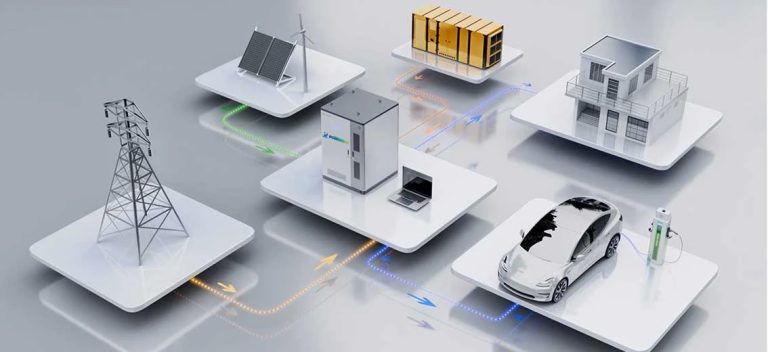
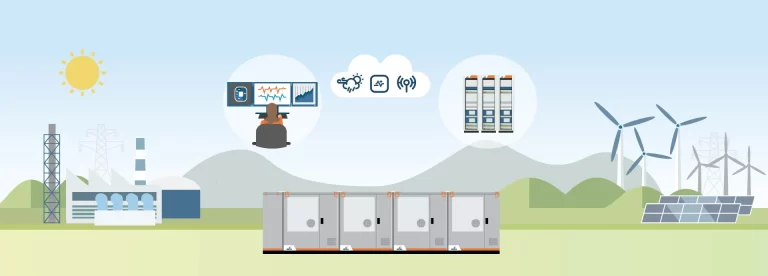
Energy storage is a critical technology for increasing power system dependability and promoting the use of renewable energy. Energy storage is a device that converts difficult-to-store electrical energy into mechanical energy, chemical energy, and other forms for storage when needed.
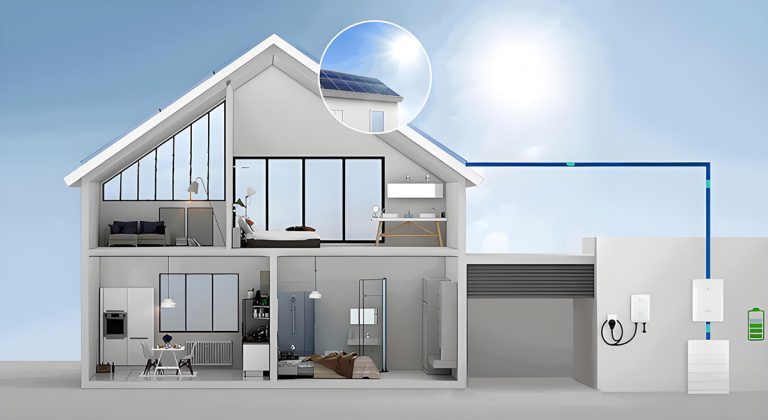
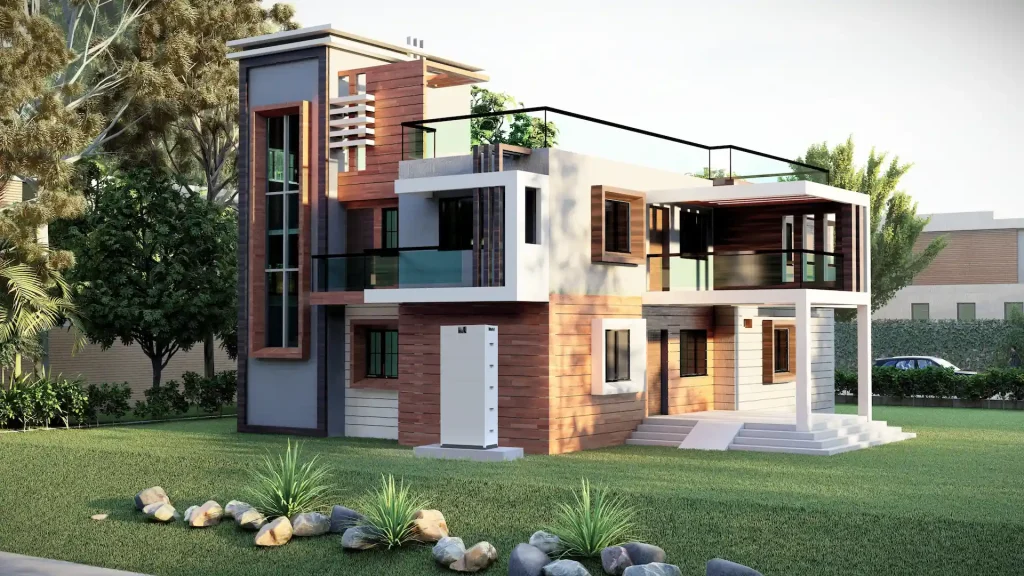
The energy storage system for residential users is referred to as household energy storage. To deliver electrical energy to home users, household energy storage systems are typically deployed in conjunction with domestic photovoltaic systems. During the day, the photovoltaic energy is consumed preferentially by the local load, and the excess energy is stored in the battery, which can be selectively incorporated into the grid when there is still a surplus of electric energy. When the photovoltaic system cannot generate electricity at night, the battery empties to supply electricity for local load consumption. The household energy storage system may increase the degree of solar self-use in the home, lower the user’s electricity cost, and assure the user’s electricity consumption stability in extreme weather and other circumstances. Purchase of household energy storage system has a good economics for users in high energy costs, high peak-valley price difference, or aging power grid places, and household users have the power to purchase household storage system. The installed capacity of single-unit household energy storage is limited, owing primarily to the use of electrochemical energy storage. The typical installed scale of domestic energy storage is from 5kWh to 10kWh.

Household energy storage usually adopts an electrochemical energy storage technology with flexible installed scale, mature industrial chain, easy mass production and deployment, and easy installation, operation and maintenance. The combination of household energy storage and household photovoltaic solves the problem that photovoltaic can not be used at night and on rainy days, and reduces the pressure brought by the large-scale use of new energy power for the power grid. Household energy storage can reduce electricity costs by increasing the proportion of self-use and participation in auxiliary services, while also serving as an emergency backup power supply to improve the reliability of household power supply when faced with major disasters and other factors that cause the middle end of the grid power to fail. The rapid increase in the proportion of VRE (volatile renewable energy) in the power grid will widen the gap between the power generation curve and the power consumption curve, and the configuration of energy storage can transfer power in time to assist the power grid in balancing the power generation capacity and power demand.
Household energy storage is a type of decentralized structure and nearby use that can adapt to decentralized power demand and resource distribution. It is divided into grid-connected and off-grid household storage systems. The grid-connected household storage system can supply power to the household load from the grid, while the household energy storage system can transmit power to the grid. The off-grid household energy storage system has no electrical connection to the grid and is appropriate for remote ungrid areas such as islands or archipelagic countries. Because of the unreliable power supply, there is a high need for domestic energy storage. Household storage installations can significantly save users’ electricity costs in power grid areas, against the backdrop of high electricity prices and energy security needs, and the economy of installed installations is gradually highlighted, driving the rapid outbreak of household storage markets.

Households that have installed photovoltaic power generation systems might change the original system by incorporating energy storage devices. From a professional standpoint, we call the grid-connected household energy storage system transformed by old users coupled with household storage system, also known as AC transformed household storage system, the system is generally composed of photovoltaic modules, grid-connected inverters, lithium batteries, AC coupled energy storage inverters, smart meters, CT, power grid, grid-connected load, and off-grid load. The system can convert solar power into AC power via a grid-connected inverter, and the excess power is transformed into DC power via an AC coupled energy storage inverter and stored in a battery. The basic idea of this household storage system is that during the day, photovoltaic power generation first serves the load, then charges the battery, and finally, excess electricity can be linked to the grid. At night, the battery discharge supplies the load, with the grid supplementing the insufficient portion. When the power grid fails, the lithium battery can only power the off-grid load and not the grid-connected load. Furthermore, the system allows users to customize their charging and discharging times to match their specific demands.
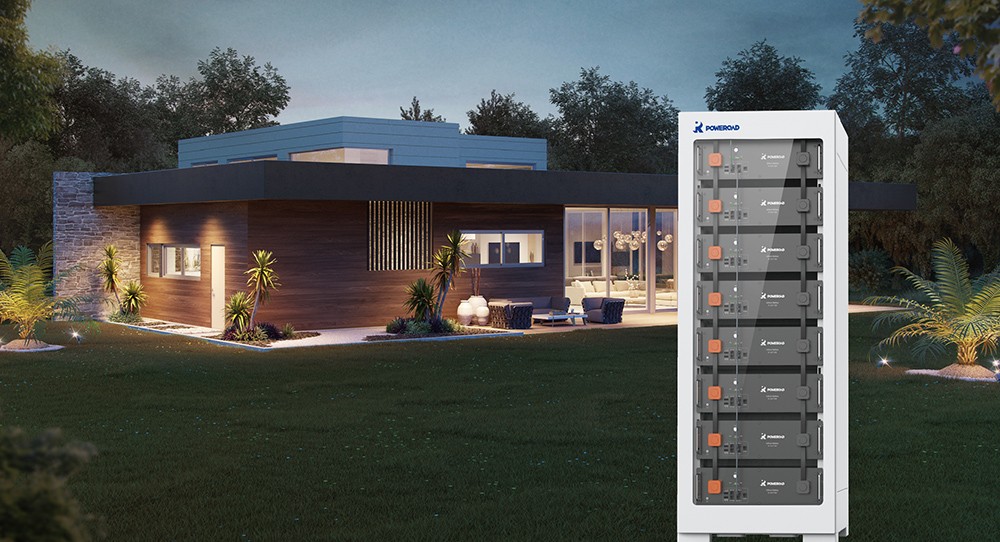
There is also a hybrid household storage system, which is currently popular in the market and well-liked by customers. Photovoltaic modules, lithium batteries, hybrid inverters, smart meters, CT, power grids, grid-connected loads, and off-grid loads comprise the hybrid household storage system. The system can charge the battery directly via DC-DC conversion and also perform bidirectional DC-AC conversion for battery charging and discharging. The basic idea is that during the day, photovoltaic power generation serves the load, then charges the battery, and ultimately, excess electricity can be transferred to the grid. At night, the battery discharge supplies the load, with the grid supplementing the insufficient portion. When the power grid fails, photovoltaic power generation and lithium batteries are only supplied to the off-grid load, and the grid-connected load is unavailable. Furthermore, the system allows users to customize their charging and discharging times to match their specific demands. The system may significantly minimize system installation time and cost, achieve intelligent control, fulfill user needs, and provide users with secure power protection when the power grid is cut off.
Related Products